I’m building an agent orchestrator fine-tuned for how real life work is done. I’m sharing everything I got. If you like numbers, keep reading! :)
Some backstory
I’ve been working on Vide as a side project for almost a year. My original goal was to build something that just works for Flutter, but I never want to build something just out of hype. I want to build truly useful stuff (also for me). At some point I noticed that pure vibe coding (generating some fun widgets) is shiny and impressive but ultimately not that interesting.
I switched to Claude Code from Cursor around the time Sonnet 4 came out. It took a bit to get used to the terminal but I learned to love it. I never really fell in love with the Claude Code interface and ergonomics though.
So Vide CLI was born. The ultimate goal: build something I personally truly love using. And I’m happy to announce, I think I did it! I’ve been using Vide CLI exclusively for months now (no VSCode, no Cursor, no other IDE, no Claude Code directly) and I’m building it completely open source for you to use as well!
What is Vide
It’s an agentic coding environment built for engineers. This means leaning into good agent orchestration (multi-agent systems, smart delegation) but equally important is having a superb experience: a state of the art TUI with real-time sync where every keystroke and workflow just feels right. To achieve this, I built a TUI framework inspired by Flutter, called Nocterm.
Where it’s going
My overall goal is to build an experience that helps us engineers build better things. AI has unlocked so many new opportunities, we just need to harvest them.
One of the areas I’m exploring is experimenting with new ways of working. For example, I’ve built a mod to embed Vide into Minecraft with the goal of understanding how spatial reasoning (physically moving between projects and files) could change the workflow (and of course also for fun, can you play a game with a friend and also work in the meantime? :D). I’m also implementing Vide as a native optimized mobile app, trying to understand how a workday without a computer could look like. More on both of these topics soon!
I’m making great progress making Vide CLI an awesome tool for everybody to use (it already is!). I use Vide all the time, any feature you see is a feature that is truly useful to me and not just fluff. Whenever I find anything that annoys me, I write it down and fix it as soon as possible.
What this blog is about
I’m doing a bunch of work and I like to take a bit of time to reflect and re-align with what I’m doing. So why not share it too? Everything is open source right now. If I happen to find a natural way to monetize, sure, but the goal right now is to build something genuinely useful.
I built a privacy-focused lightweight analytics tool since I didn’t find the solutions out there suitable for my needs (also because I can). I use it to track usage.
Numbers!
Who doesn’t love some growing numbers? I certainly do, while numbers are not everything, it’s nice to at least quantify something.
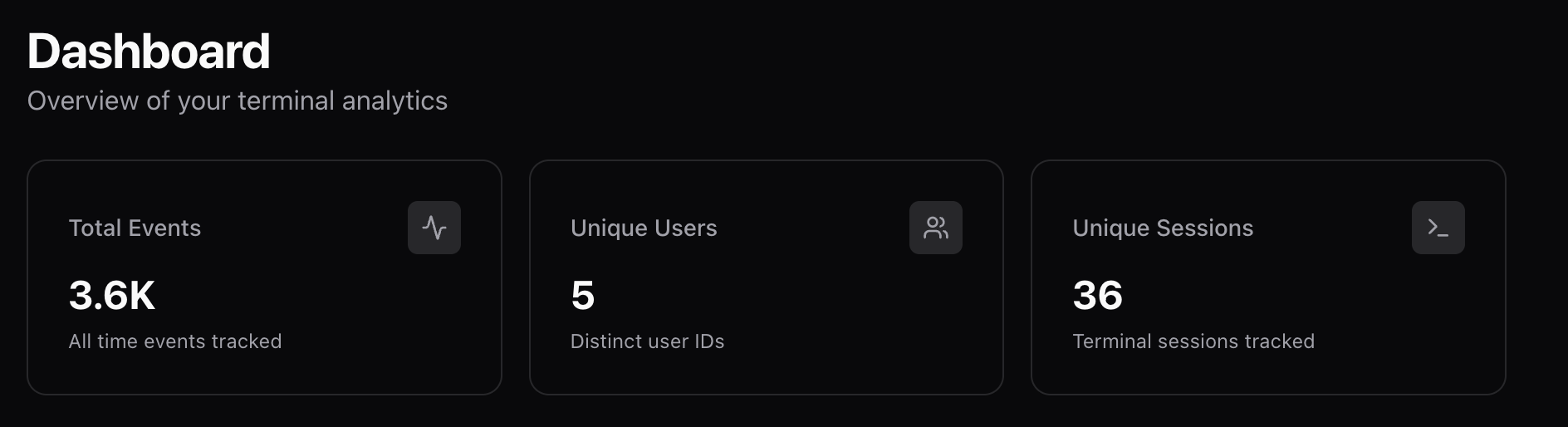
Vide Analytics
I migrated to a different server for the tracking database and wasn’t bothered syncing the old data back up. It was around 30 unique users before, so no big loss.
Vide Stars
Github Stars for vide_cli, didn’t post about it all too much yet.

Nocterm Stars
Github stars for nocterm, the first 100 stars were super quick, growth has stalled a bit (is the Dart ecosystem just too small?), but I feel like adoption has been growing quite a bit (I see more and more people building cool stuff with it!).

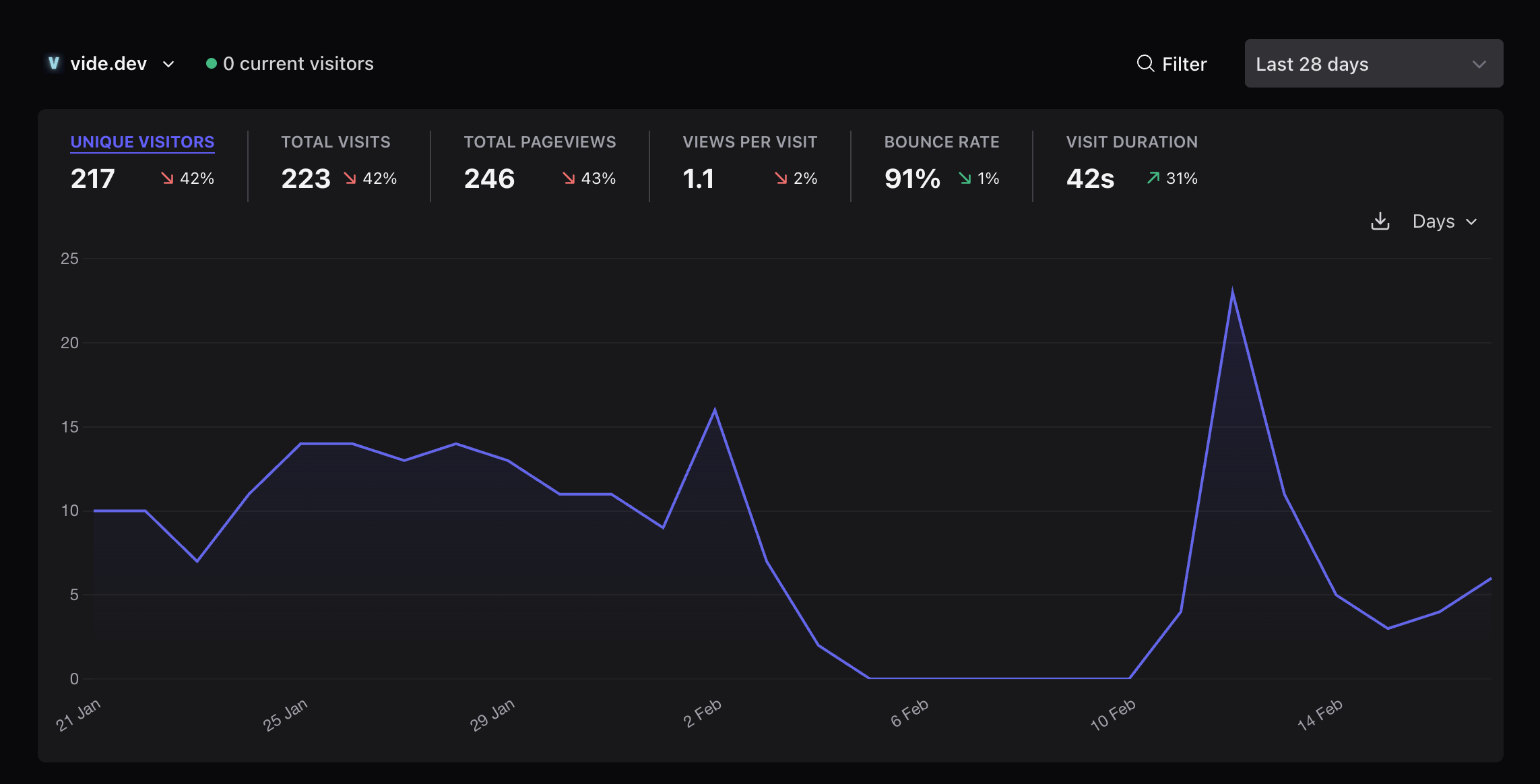
Vide Web Analytics
For the days with 0 traffic, I re-designed the landing page and unfortunately forgot to include the Plausible tracker (whoops)!
Recent work
I did a Show HN of Nocterm (Hackernews) - it didn’t get many upvotes but it did actually drive a bit of traffic. Might do it again in the future.
I don’t want to bore you with the details but most of the recent work has gone into refactoring Vide to a proper client-server architecture with a daemon process. Before, the Vide CLI TUI owned the connection to the Claude Code SDK, so when you killed the TUI process, you killed the agent.
Now, a persistent Vide daemon runs on your machine (personal PC or VPS) and you configure the TUI to connect to that session. This allows you to share sessions in real time, connect from a server, etc.
A bunch of work also went into making the Vide mobile app seamless with a great UX.
Wanna be in the TestFlight for Vide Mobile? Join the Discord!
Next steps
For the next week, I’m planning on working on the following features. More importantly though, I want to start sharing more, not just about Vide, but also my experiences working in this new world and cool things I stumble upon!
-
Multi-agent support (Codex etc.) I used Codex for a bit and I think it’s great! The goal all along was to build a coding-agent-agnostic coding environment (lol). I see interesting opportunities in having Claude and Codex collaborate on tasks to gain different perspectives. It shouldn’t stop at Codex. Gemini CLI, Cursor CLI, etc. should all follow soon.
-
Slack channel overview I had this idea the other day. I want to visualize the collaborative process better than just a list. A Slack-channel-like interface came to mind, you can still fully observe each agent in isolation OR you can just listen in on the channel where agents occasionally push status updates!
-
Release Vide Mobile Vide Mobile is currently in TestFlight (still rocking the default Flutter icon). I want to clean that up and get it out to everybody! If anybody wants early access, ping me on Discord!
-
Migrate to daemon-first onboarding The Vide daemon is pretty stable at this point, but the default flow still uses a local in-process session. I want to change the onboarding to a daemon-first approach and slowly phase out the local session altogether.
-
New landing page messaging The landing page is all over the place. I need to refine the messaging and be clear on what Vide is and where it’s going.